


Antigen Discovery and Quantification Service
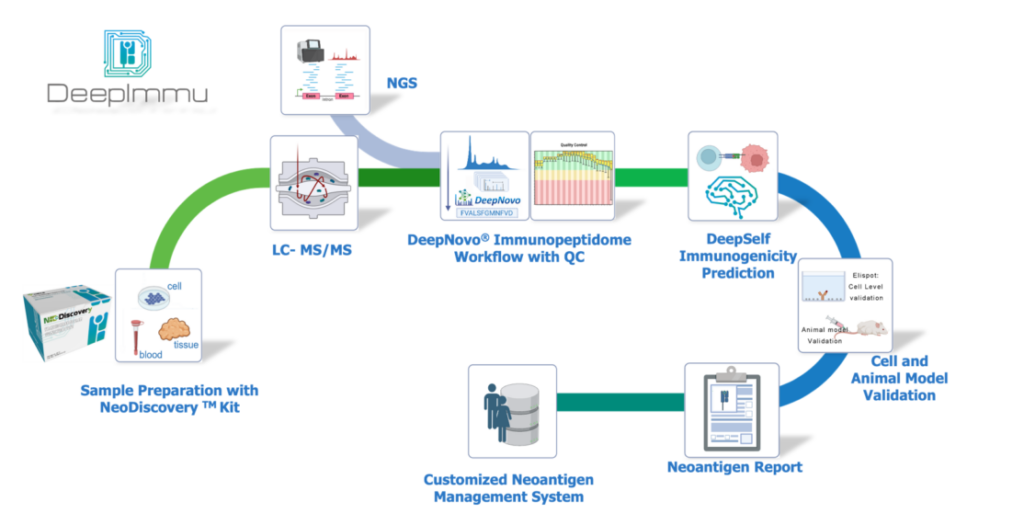
Our DeepImmu® Immunopeptidomics Discovery Service offers a comprehensive solution for identifying and characterising antigens specifically displayed on infected cells or tumours. Understanding the patterns of MHC-peptide presentation is a critical step for the development of immunotherapies and cancer vaccines. Our method is sure to find both canonical and non-canonical peptides, aiding neo-antigen discovery.
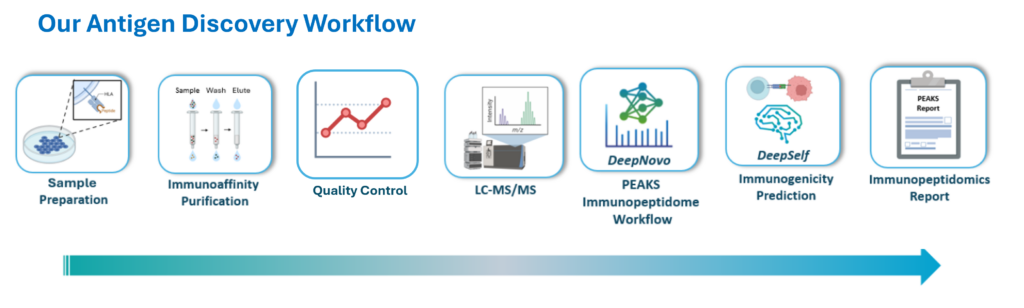
We provide an end-to-end workflow spanning MHC immunopeptidome purification, LC-MS/MS acquisition, and data analysis powered by our AI-driven DeepNovo® algorithm. Along with the identified peptides, we provide sequence motif generation, binding affinity and DeepSelf immunogenicity prediction, sites of glycosylation and strict quality control tests to ensure accurate results. This will provide users with a list of peptide candidates to explore downstream for therapeutic development.
To get a deeper look at top peptide candidates, DeepImmu can be taken a step further to quantify the amount of peptide present, ensuring these antigens are valid targets.
Request Pricing / Schedule Consultation
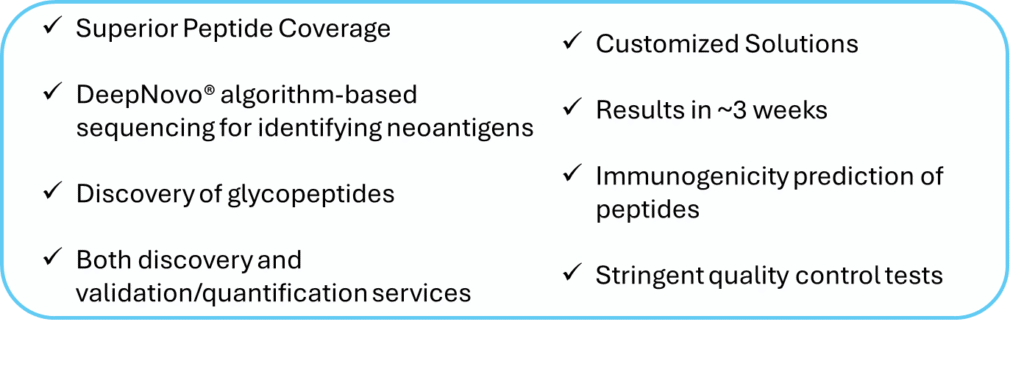
Key Service Advantages
Sample Preparation
Accepted sample types:
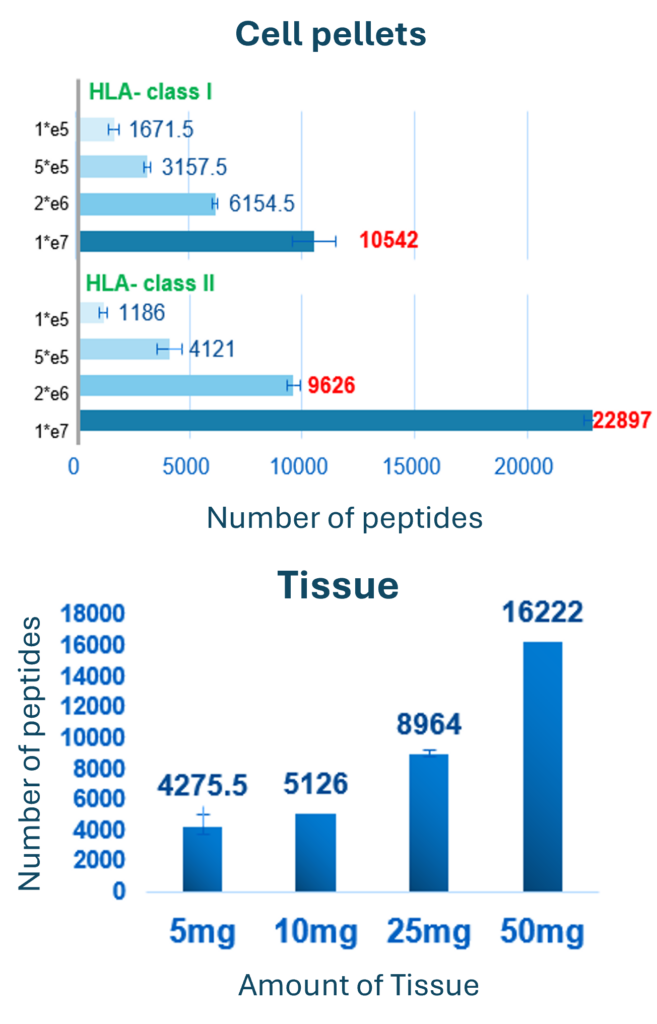
- Cell pellets – 1 × 10⁷ cells
- Blood – 2 ml
- Tissue – 50 mg
Use our neoantigen discovery sample preparation kit, which includes pan-specific HLA/MHC antibodies for complex pull-downs.
Our sample prep yields 9000+ immunopeptides identified from cancer cell lines and 20000+ from 50 mg of tumour tissue.
Immunoaffinity Purification
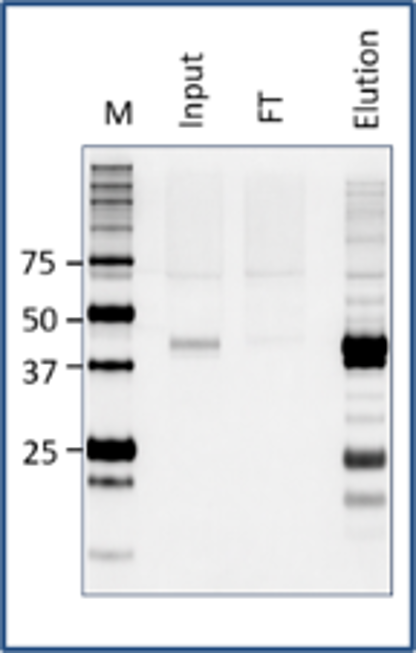
MHC complexes are pulled down by antibodies bound to beads. The remaining unbound proteins are washed away. To validate that the MHC purification worked, a Western blot analysis is performed. The bound peptides are eluted off the complex for injection into the mass spectrometer.
Quality Control
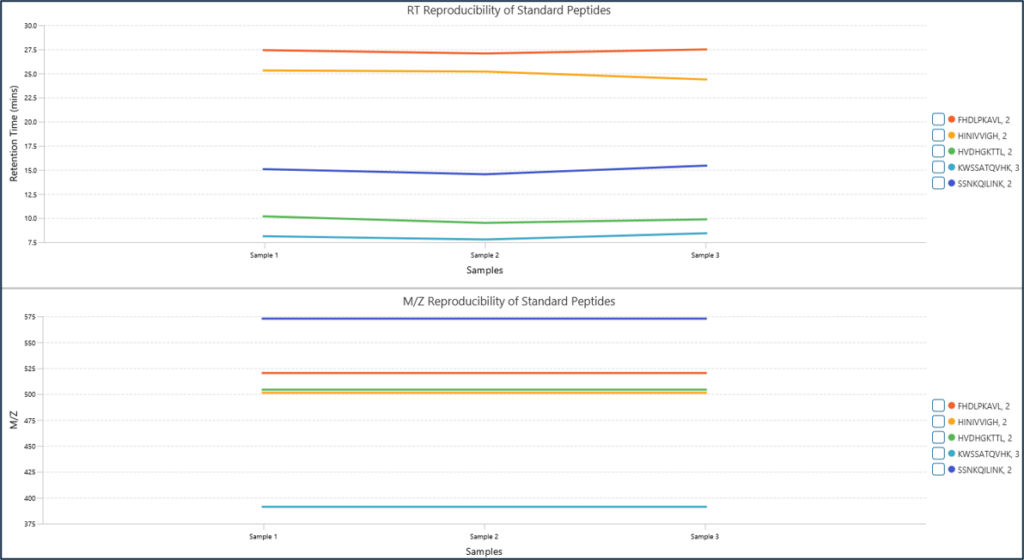
We ensure our sample prep and LC-MS methods maintain the same sensitivity across samples and LC-MS runs. As part of our sample preparation, we spike in QC peptides that can be monitored across samples to ensure the RT and M/Z are consistent for reproducible and confident results.
LC-MS/MS Instrumentation
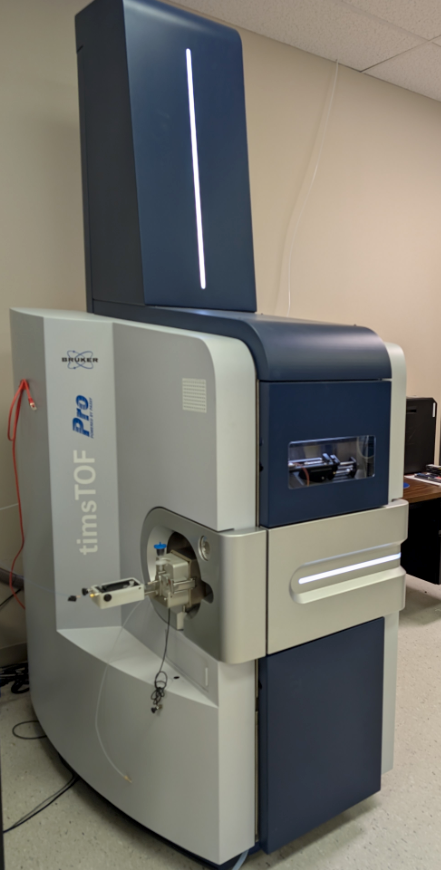
The peptides are run on the timsTOF Pro instrument, providing high sensitivity for peptide identification. Each sample is run in triplicate for reliable results
PEAKS Immunopeptidome Workflow
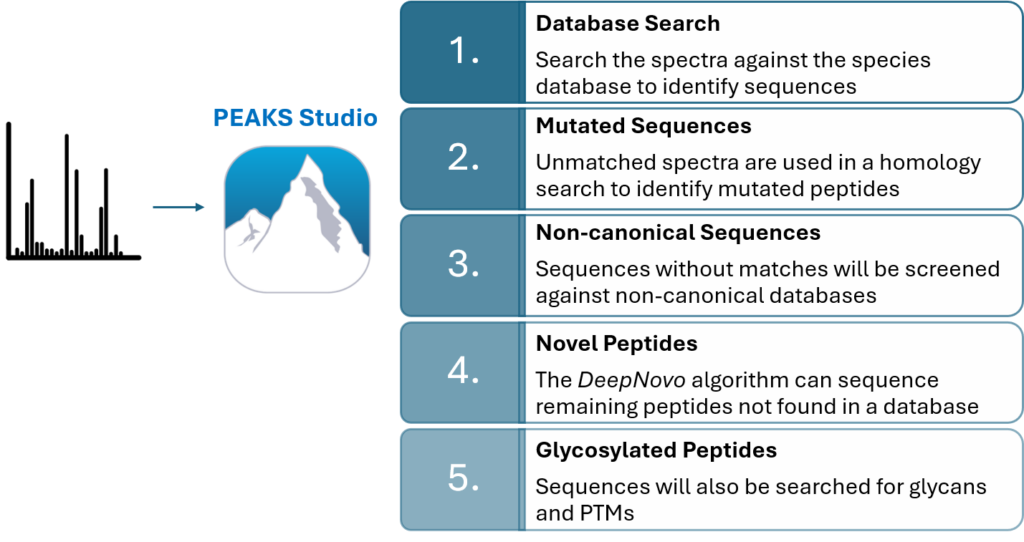
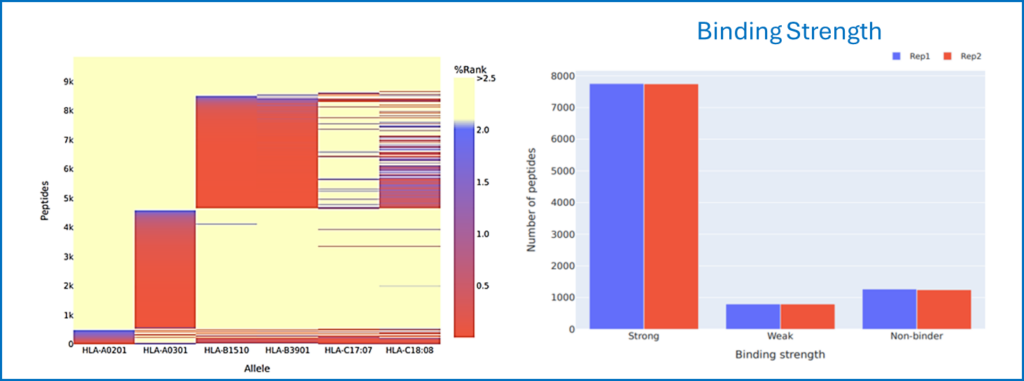
Our PEAKS Peptidome workflow enables accurate peptide de novo sequencing, database searching, and mapping to gene loci to reveal both canonical and non-canonical peptide origins. We also perform homology and PTM searches to identify mutated and modified peptides, respectively. Our PTM search includes glycan profiling and discovery of HLA glycopeptides. After peptide identification, binding affinity is predicted for each HLA allele.
Immunogenicity Predictions
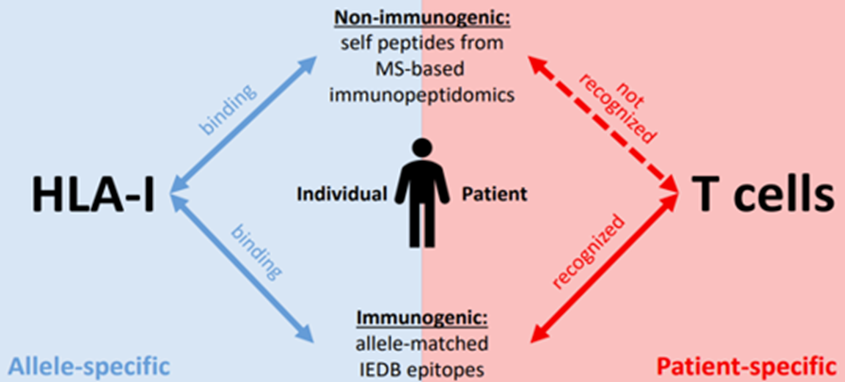
We use our in-house tool DeepSelf to predict the immunogenicity of the identified peptides. This algorithm is trained on real data and will provide a list of peptides ranked by immunogenicity.
Full Report
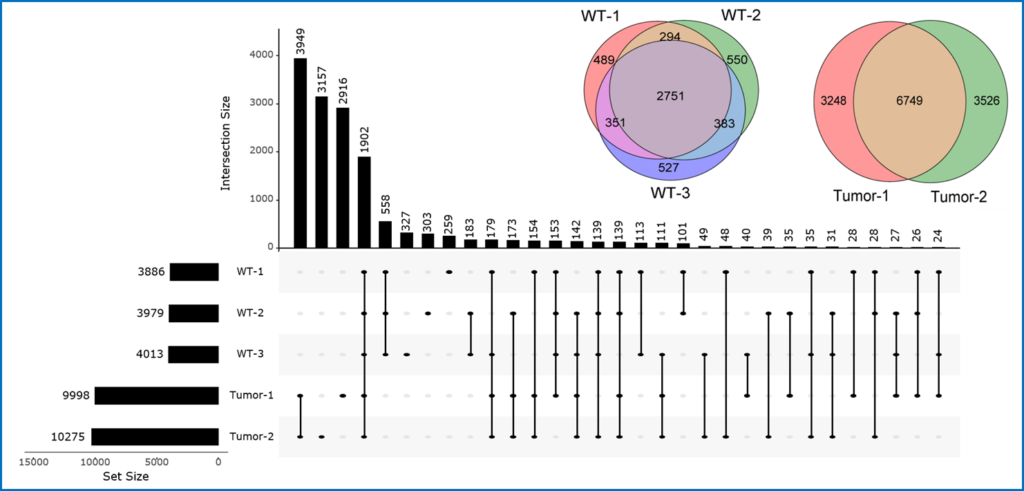
Customers will be provided with the list of peptides ranked by immunogenicity, along with a full report that includes QC results, binding affinity predictions of peptides, sequence motif comparison for predicted vs. observed, and peptide comparison between treatment groups if applicable.
HLA-II Glycopeptide
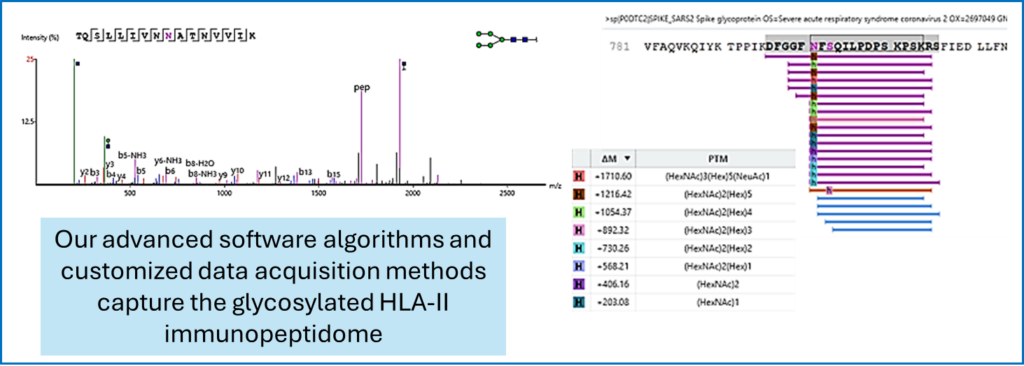
Allele Predictions
Peptide Comparisons
Our Antigen Validation and Quantification Pipeline
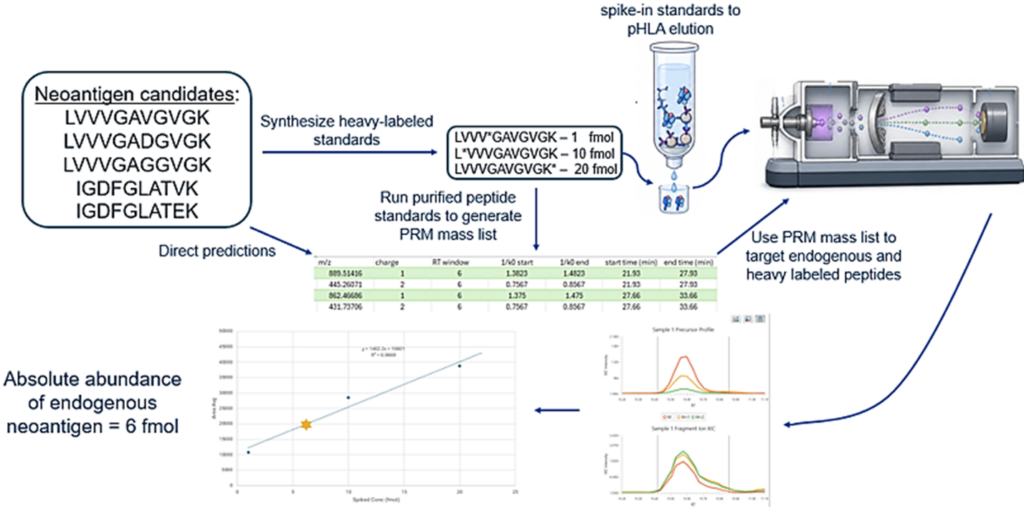
Whether the peptide targets are already known or they were identified using our discovery workflow, our validation and quantification pipeline can ensure that the desired peptide is being detected and in what abundance.
Targeted mass spectrometry by parallel reaction monitoring (PRM) offers a sensitive and quantitative approach for analysis of neoantigens. Neoantigens derived from somatic mutations or non-canonical translation can be predicted from next-generation sequencing data and using in silico HLA binding predictions, but validating their expression and presentation requires direct evidence by mass spectrometry. In addition, the absolute abundance of neoantigens displayed on the cell surface advises whether a particular cancer vaccine may be effective.
What we require:
- Accepted Sample Types
- Cell pellets – 1 × 10⁷ cells
- Blood – 2 ml
- Tissue – 50 mg
- HLA Allele (if available)
- Species information
What we provide:
A comprehensive report with:
- Qualitative results of immunopeptides and corresponding protein information list
- List of all predicted immunopeptides ranked by immunogenicity scores
- QC test results
- Immunopeptide length distribution chart and binding affinity prediction
- Sequence motifs for HLA allele
Send us your samples today!
We work with customs brokers to ensure smooth, timely delivery of shipments from across the globe.
Your research is important to us. We want to help you get the results you're looking for. Contact us to schedule a free consultation to discuss your project. We will help you determine the optimal experimental setup for a fast turnaround time and the best price.

References & Resources
References
- Ming Li, Ngoc Hieu Tran, Chao Peng et al. A complete mass spectrometry-based immunopeptidomics pipeline for neoantigen identification and validation, 09 November 2023, PREPRINT (Version 1) available at Research Square