


PEAKS® Studio 13.5
Complete Solution for Bottom-Up Proteomics
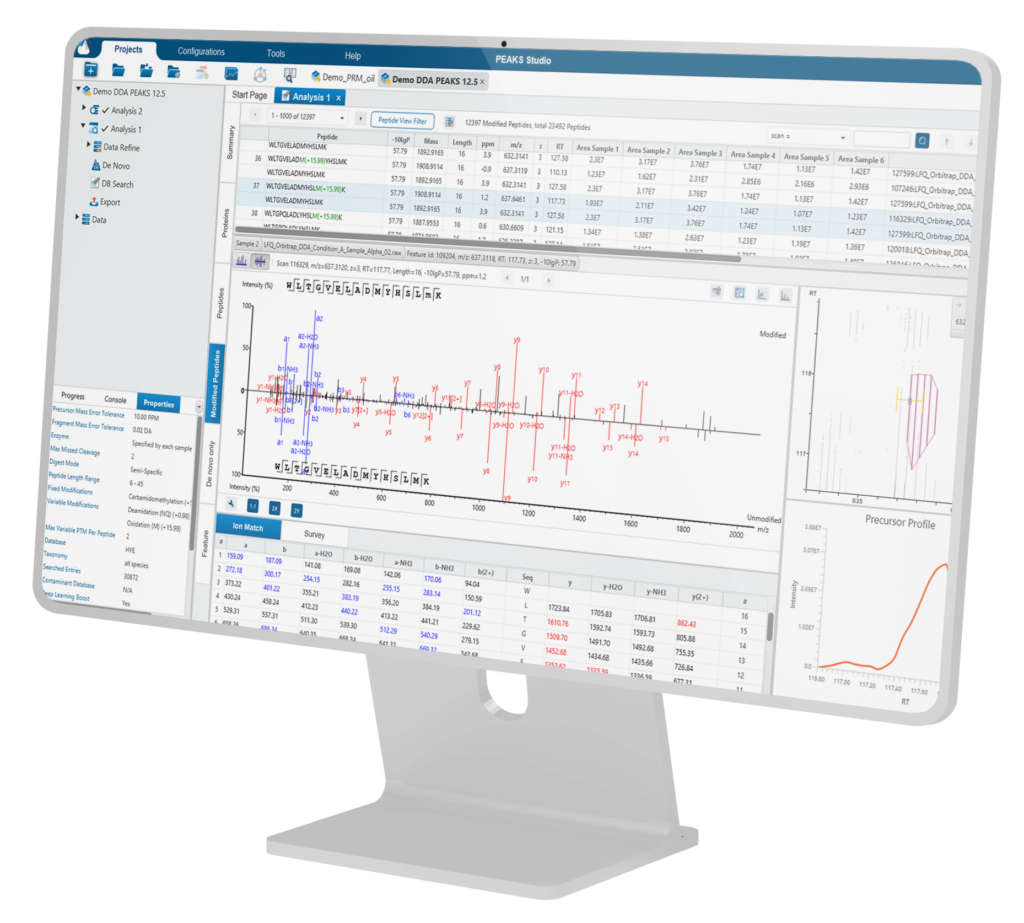
PEAKS® Studio offers a complete bottom-up proteomics solution with increased accuracy, sensitivity, and speed. Updated workflows for a variety of applications, such as in-depth canonical and non-canonical peptide and protein identifications, make PEAKS® a unique solution. From DDA to DIA data support, PEAKS® Studio provides a comprehensive solution to bring your research to new heights!

One-Stop
Discovery and Targeted Proteomics

Comprehensive
and Confident
DDA Solutions

High Accuracy and Sensitivity DIA Solutions

High Precision
PRM and MRM Solutions

de novo and
DeepNovo
Algorithms

Vendor Neutral
Software
Contact Us to Add PEAKS Studio to your lab!
DDA and DIA Done Right: Multi-Engine Powerhouse
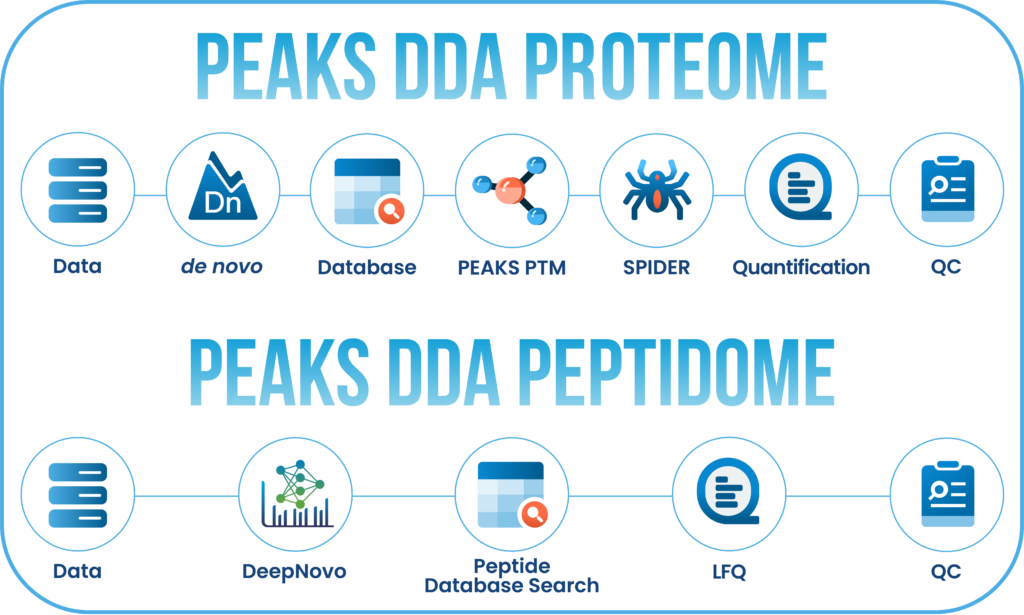
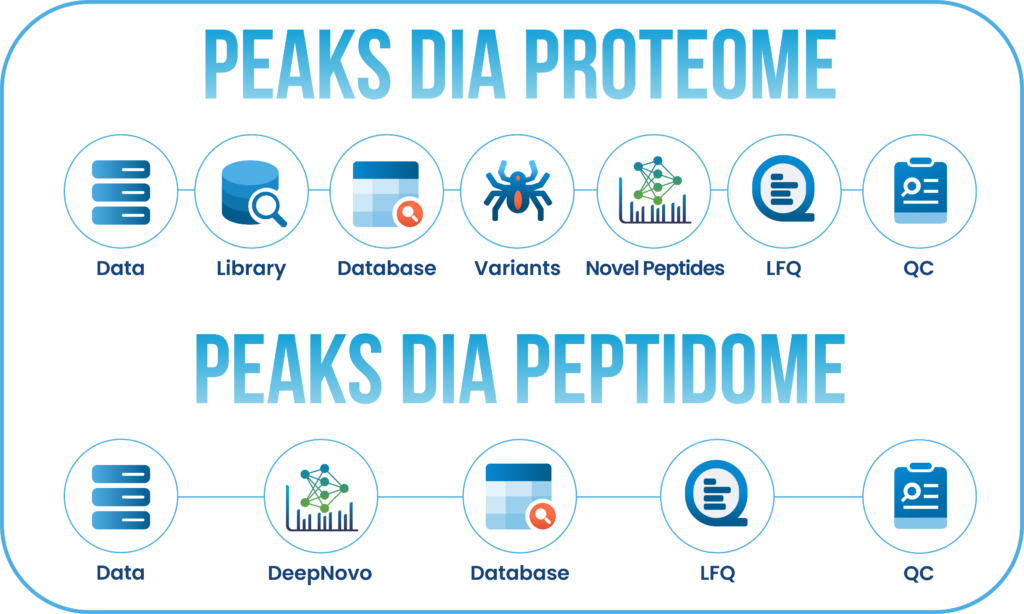
In PEAKS, the DDA and DIA workflows have been streamlined into two powerful options: Proteome and Peptidome.
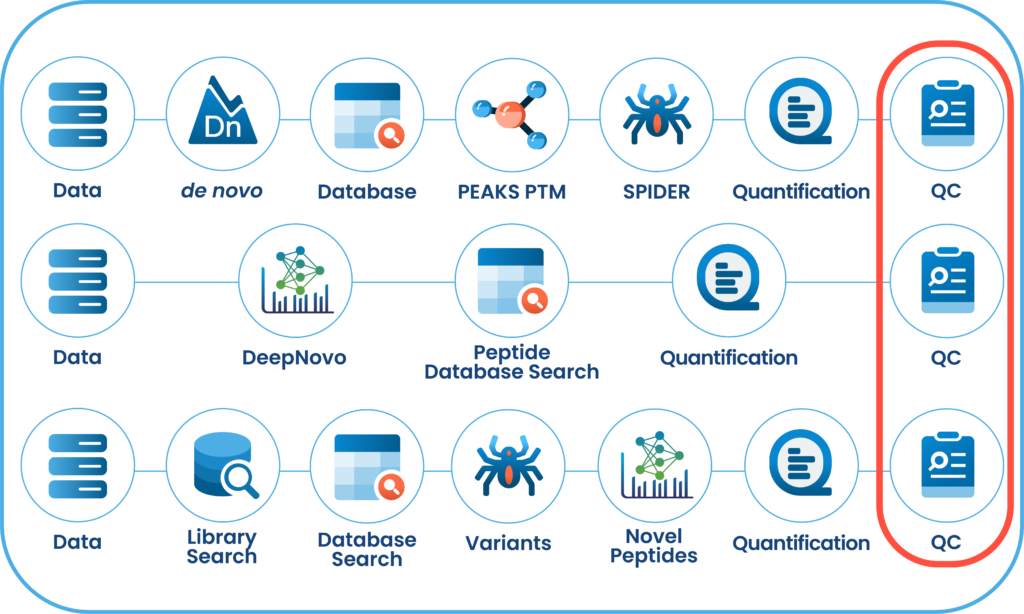
The Proteome workflows support traditional protein identification and quantification, with results focused at the protein level. Meanwhile, the Peptidome workflows leverage DeepNovo’s deep learning-based de novo sequencing, combined with peptide database searches and sequence variant analysis, to deliver insights at the peptide level.
Users can customise their analysis workflows, selecting which steps to run and adding or modifying steps at any point. Results are organised into intuitive result nodes, making it easier to interpret, explore, and validate your data.
Key Features

DIA Workflow

LC/MS Data
Refine View

Feature-Based Identification

DeepNovo
Peptidome

Confident
PTM/Mutations

Quality Control (QC) Function

DIA Feature
View

Quantification
View

Hybrid DIA
and PRM/MRM

Protein &
Peptide View
Streamlined Workflow with Direct Database Search for DIA
PEAKS Studio offers a unique DIA workflow to maximise identification of peptides by integrating five methods, including spectral library, direct database search, de novo sequencing, PTM profiling and sequence variant analysis
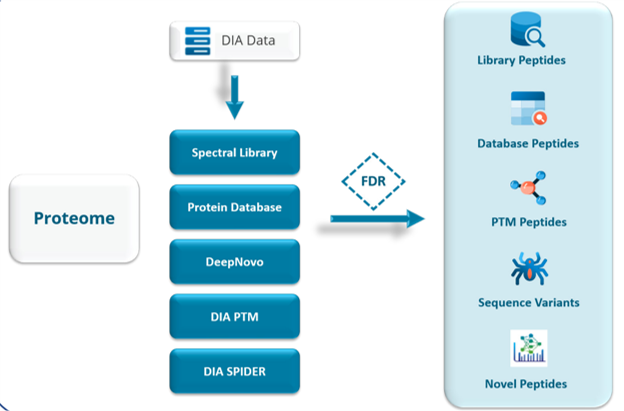
If a peptide spectral library is available, PEAKS will provide the library peptide matches that pass the false discovery rate control. Any MS/MS spectra that did not match a spectral library entry are searched against an in silico digested and predicted protein sequence database if no spectral library was used.
Additionally, de novo sequencing is available for DIA data to confidently characterise novel peptides, sequence variants and unspecified PTMs. Our integration of spectrum-centric and peptide-centric approaches pioneers comprehensive profiling of PTMs without the use of a spectral library.
Label-free quantification can be performed on identified library and database peptides to investigate changes in relative protein/peptide abundance across multiple conditions.
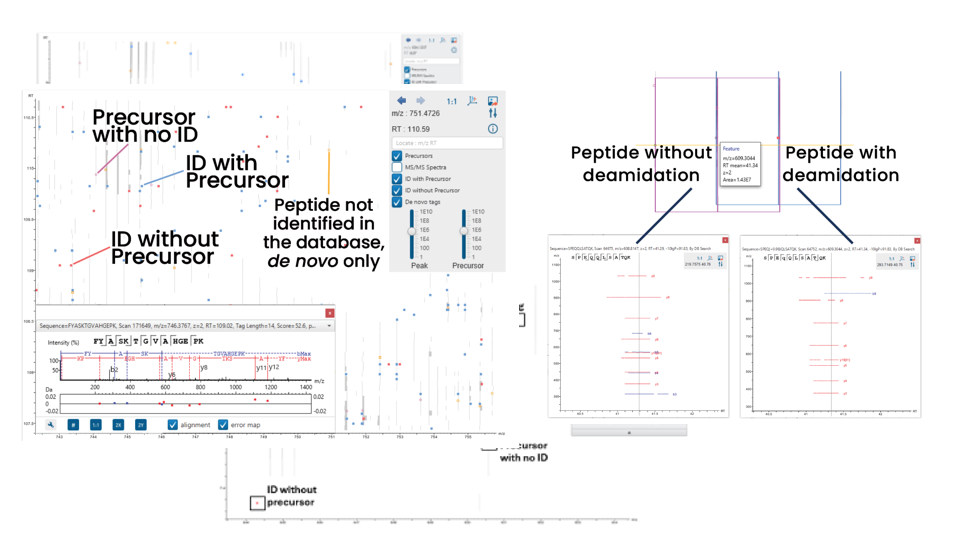
LC/MS Data Refine View
Users can now easily visualise precursors, identifications with and without associated precursors, and de novo tags on the LC/MS map for improved result validation.
Additionally, the peptides tab and LC/MS map are more seamlessly integrated. Click on one or more identifications to show and compare the supporting fragment ions. This makes it easy to verify overlapping peptide identifications.
The supporting fragment ions are also shown in an LC/MS snapshot in the peptides tab. Users can also click to show the identification on the full LC/MS map.
Feature-Based Identification
- MS1 Feature-based Identification increases sensitivity and peptide ID efficiency.
- Designed for DDA technology to improve reproducibility.
- Integrate database search and de novo sequencing to extend in-depth analysis.
- Activate Deep learning-boost in PEAKS DDA workflows to maximise peptide ID efficiency.
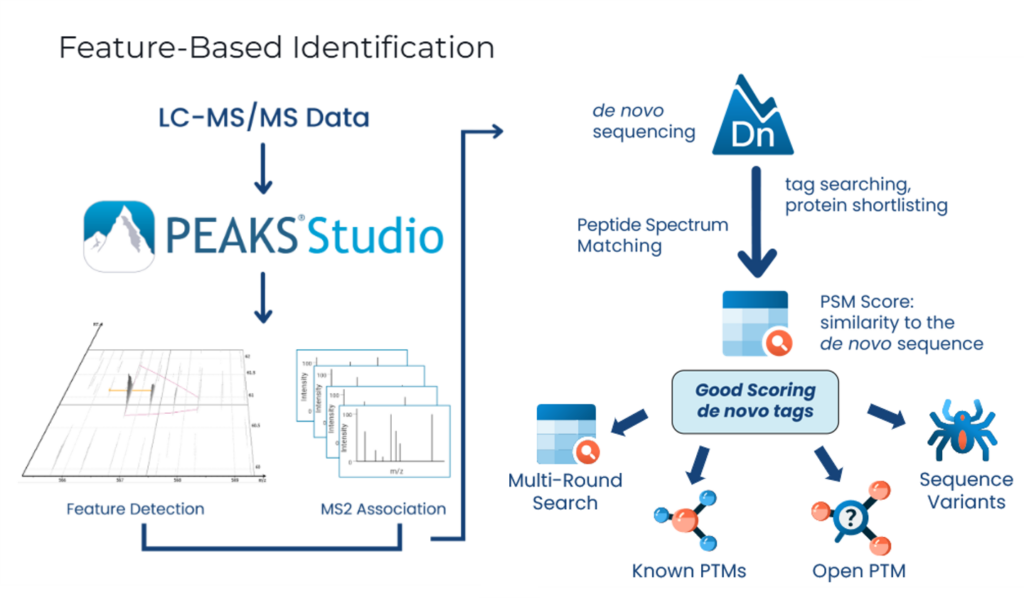
- With any leftover unassigned spectra with good-scoring de novo tags, we can perform functions such as multi-round search, PEAKS PTM, Open PTM, and sequence variants
PEAKS DeepNovo Peptidome: Advanced solution for Immunopeptidomics
The DeepNovo Peptidome workflow is designed to bridge the gap between proteomics and genomics through the integration of a comprehensive gene table. The DDA workflow supports non-canonical reference sequences, allowing for the identification of variant and modified sequences that are often missed by standard canonical reference databases. DIA peptidome has support for spectral library, target peptide list, and spiked peptide list with results reported as candidate peptides.
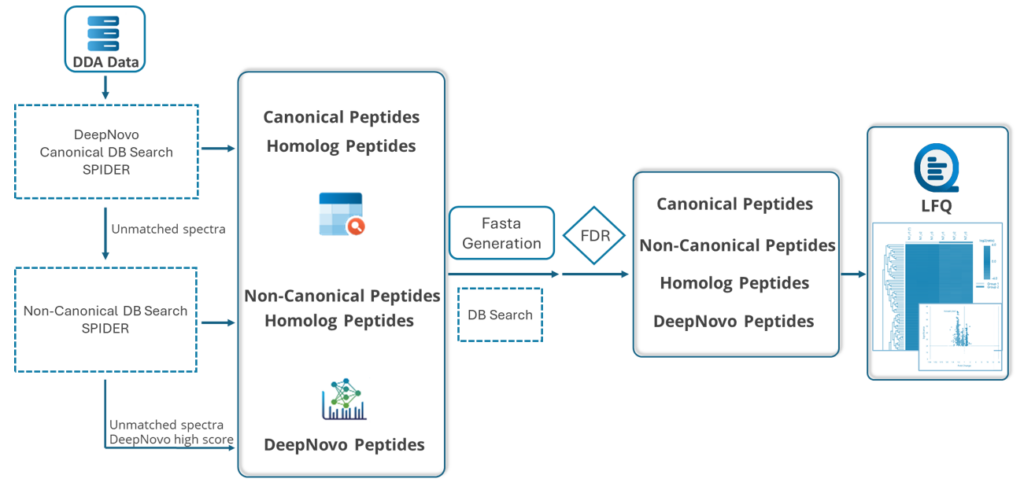
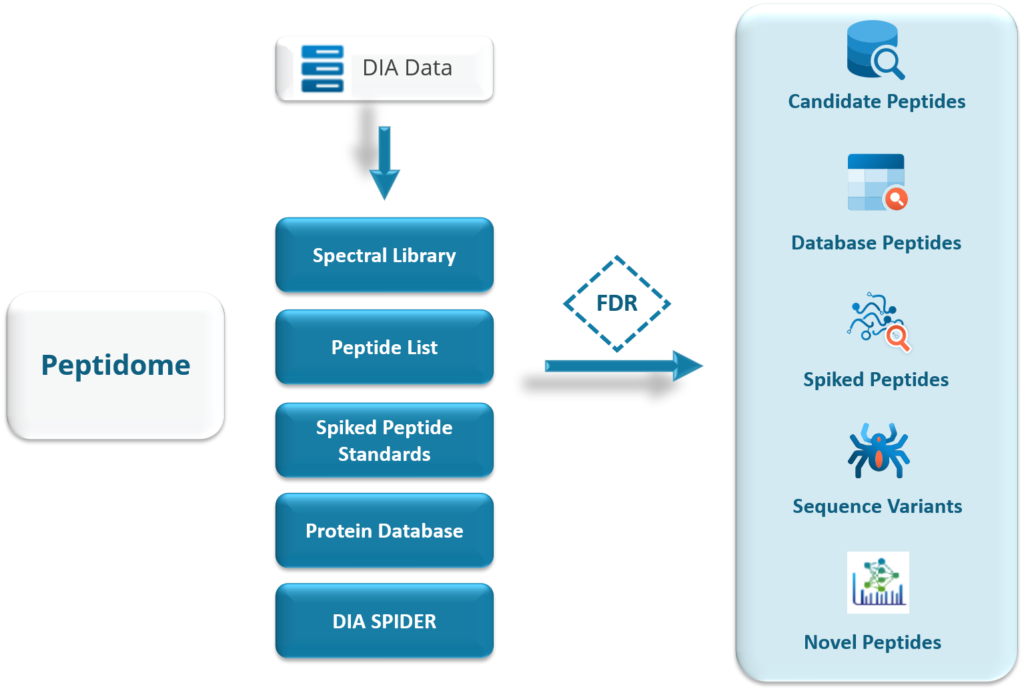
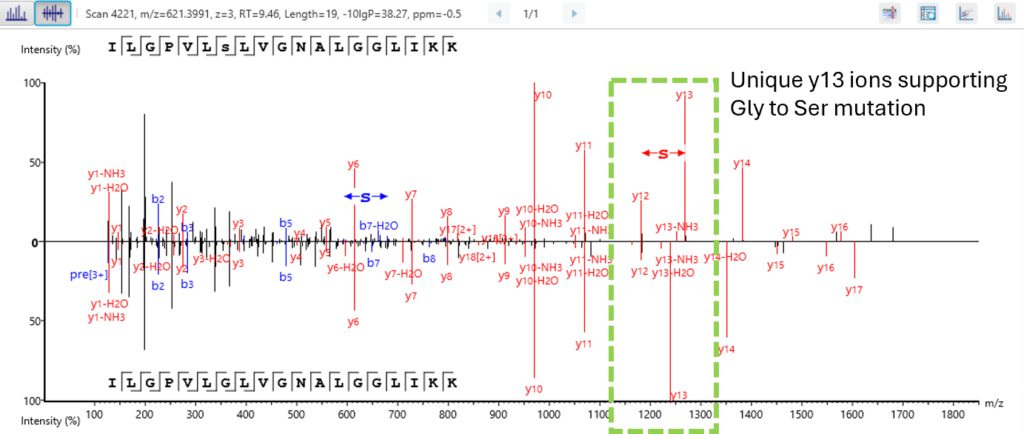
Next level confidence: confident PTM/mutation sites identification based on amino acid level evidence
The Post-Translational Modification (PTM) and Mutations Analysis workflow offers next-level confidence by enabling the identification of PTM and mutation sites with high precision, grounded on amino acid-level evidence.
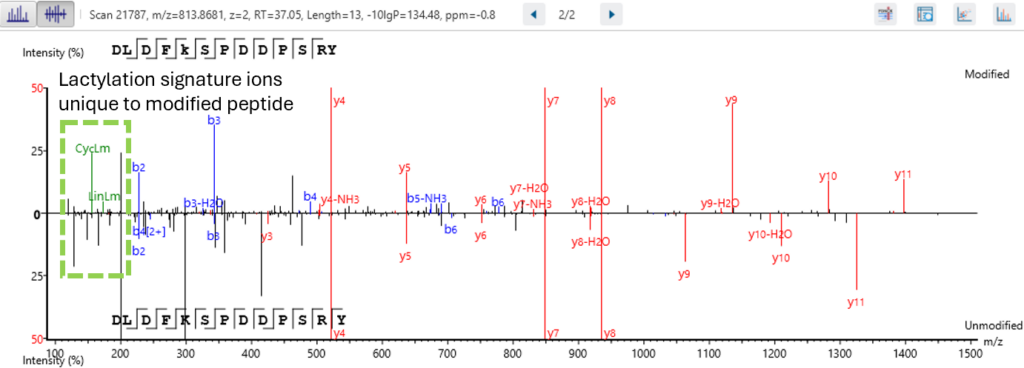
This advanced capability allows researchers to pinpoint specific modifications and mutations within proteins, providing a detailed and accurate understanding of protein function and regulation. By leveraging robust algorithms and comprehensive data analysis, this workflow ensures that PTM and mutation sites are identified with exceptional confidence, facilitating deeper insights into protein dynamics and disease mechanisms. This enhanced analytical power is crucial for advancing our understanding of biological processes and developing targeted therapeutic strategies.
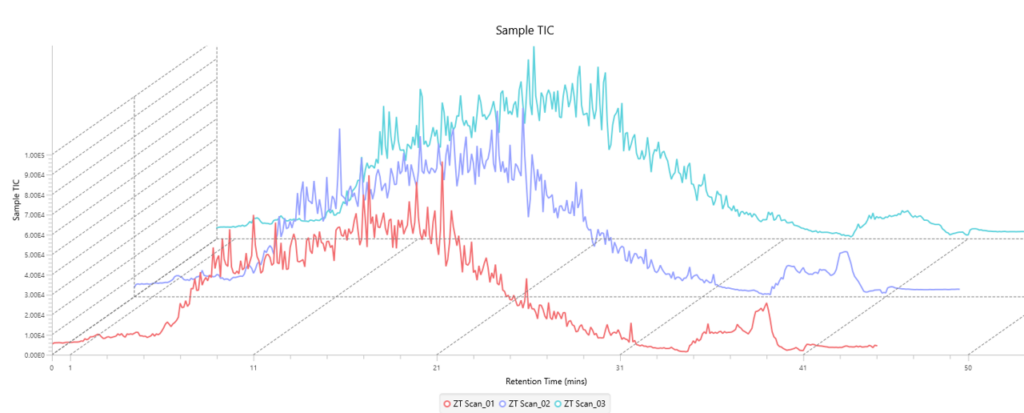
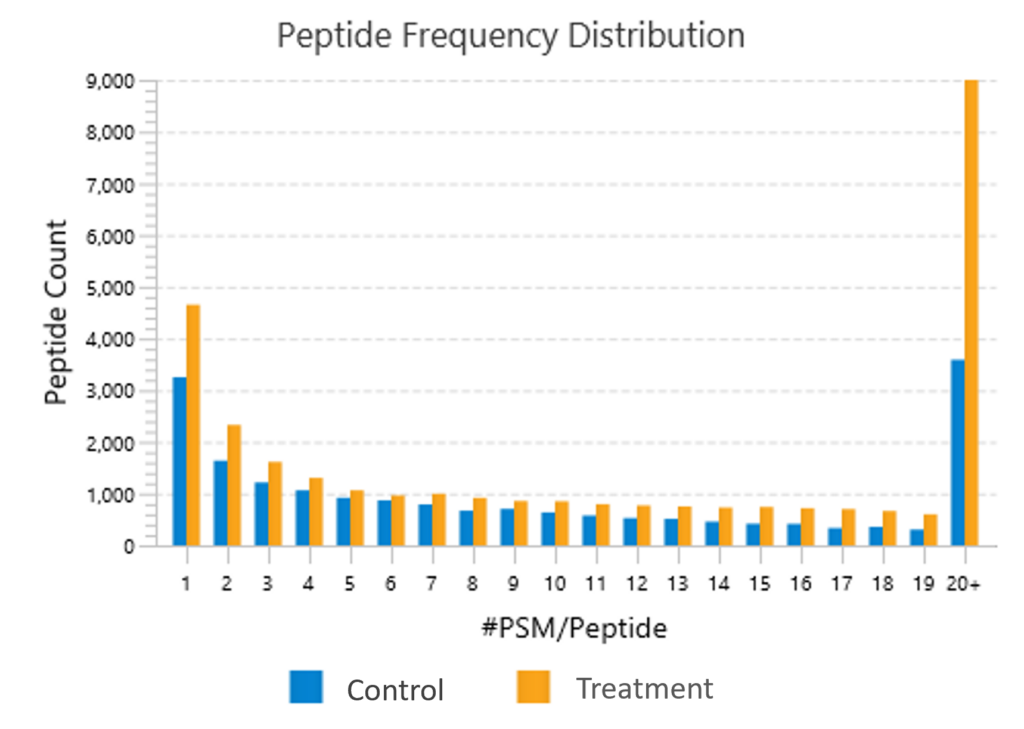
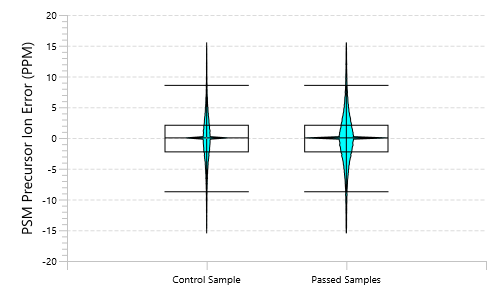
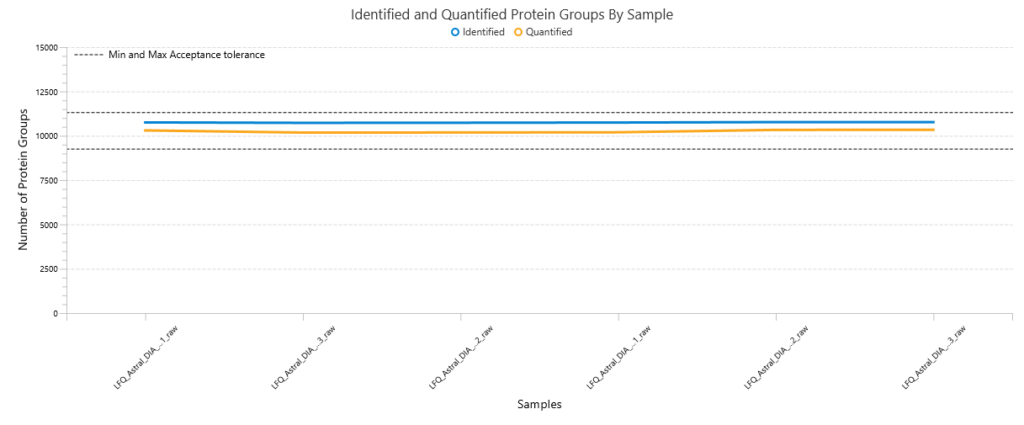
Quality Control (QC) Function for in-depth analysis from raw data to results
With the Quality Control (QC) analysis in PEAKS® Studio, users can assess statistical information of the raw data and/or results and gain beneficial insight into the attributes of the LC-MS acquisition. This automated tool is designed for both DDA and DIA data and will supply the elements to determine the quality of the data and evaluate the setup of the experiment.
The DIA Feature View
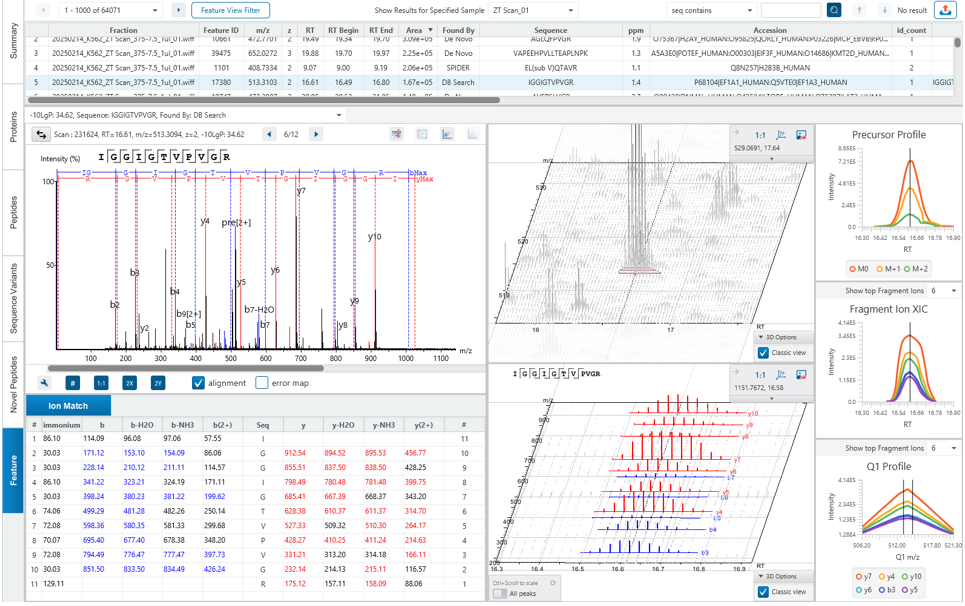
DIA Feature View stems from PEAKS dedication to provide full result transparency, allowing the user to investigate, validate, and confirm the precursor. All features, with ID and without ID, are displayed with all fragment assignments, mirror plots to show correlation of empirical and predicted fragments, MS1 and MS2 feature views.
The Quantification View
With the add-on module of PEAKS Q, PEAKS Studio also determines relative protein abundance changes across a set of samples simultaneously and without the requirement for prior knowledge of the proteins involved. In PEAKS, peptides found through PEAKS PTM or SPIDER searches will be included in the quantification step.
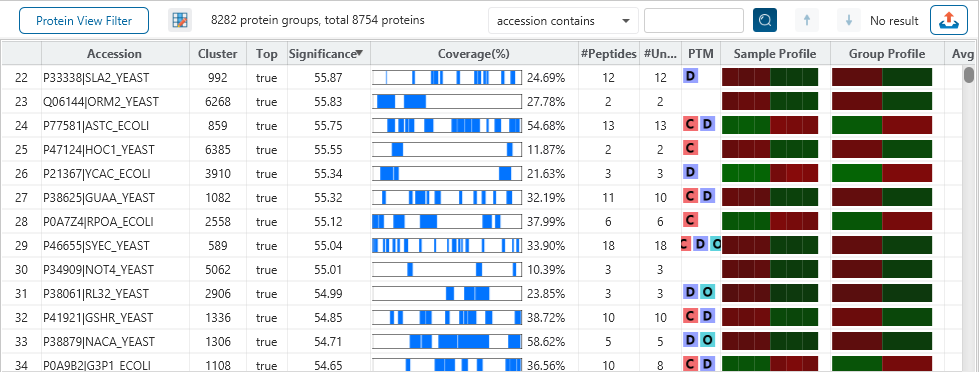
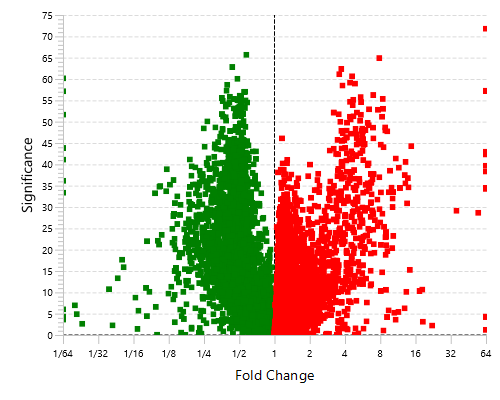
Highly differentially expressed proteins between the two groups are identified by a statistical analysis tool (fold change >2, FDR <0.01) and displayed in a heatmap format.
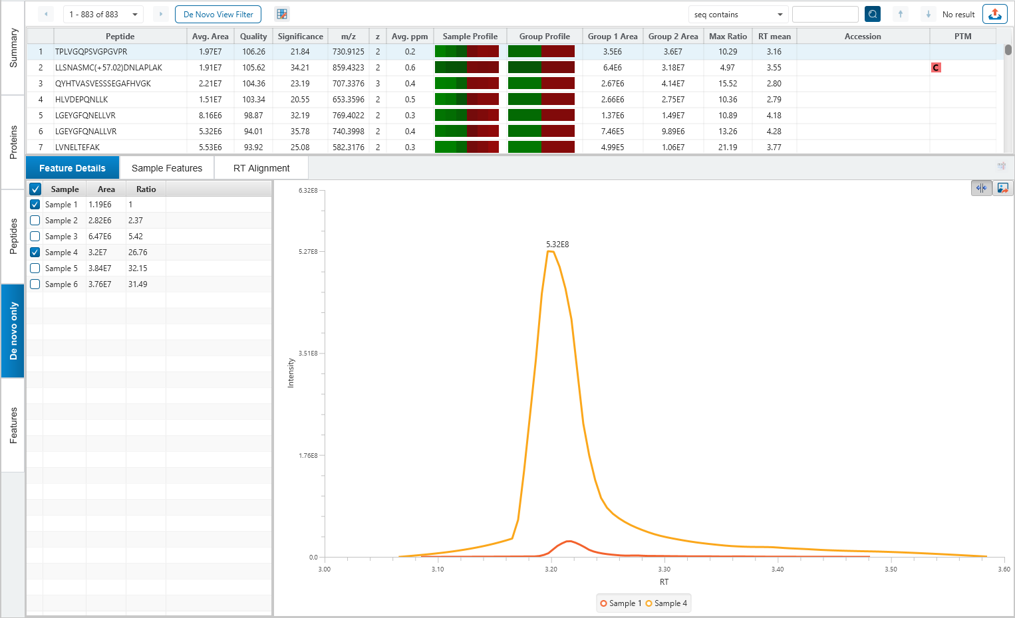
If “Feature-based” quantification is selected, then the LFQ result will contain a new “de novo only” tab with quantification results for peptides which were not matched to the database.
Hybrid DIA
The Hybrid-DIA technology by Thermo, available exclusively in PEAKS Studio, combines targeted and discovery-driven approaches, making it ideal for clinical proteomics applications.
Hybrid-PRM/DIA is a new, intuitive data acquisition strategy that enables enhanced sensitivity for a specific set of analyses by the intelligent triggering of multiplexed parallel reaction monitoring (PRM) in combination with the discovery-driven digitisation of the clinical biospecimen using DIA. Heavy labelled reference peptides are utilised as triggers for PRM and monitoring of endogenous peptides.
PRM/MRM
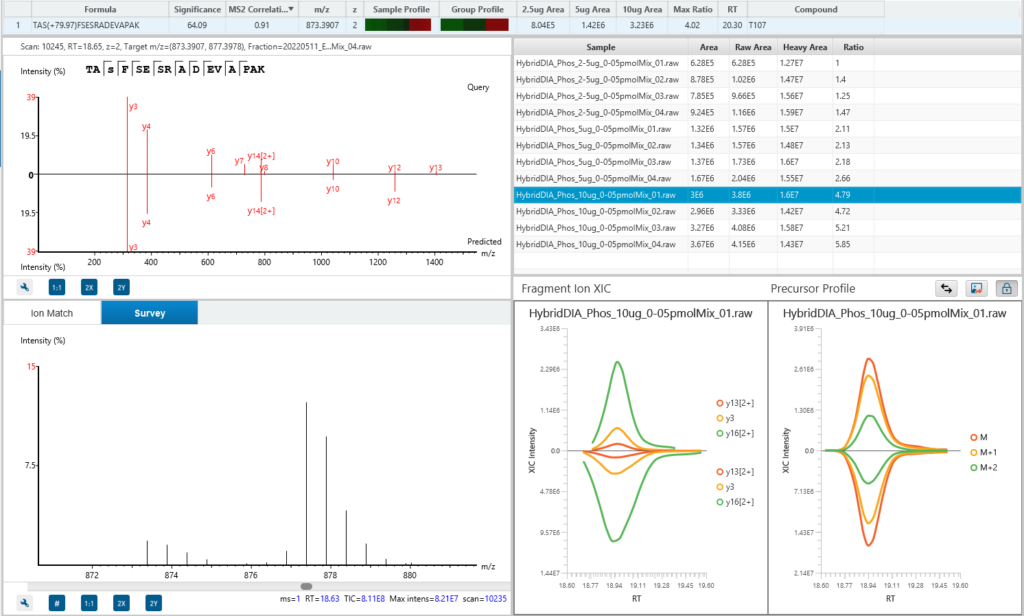
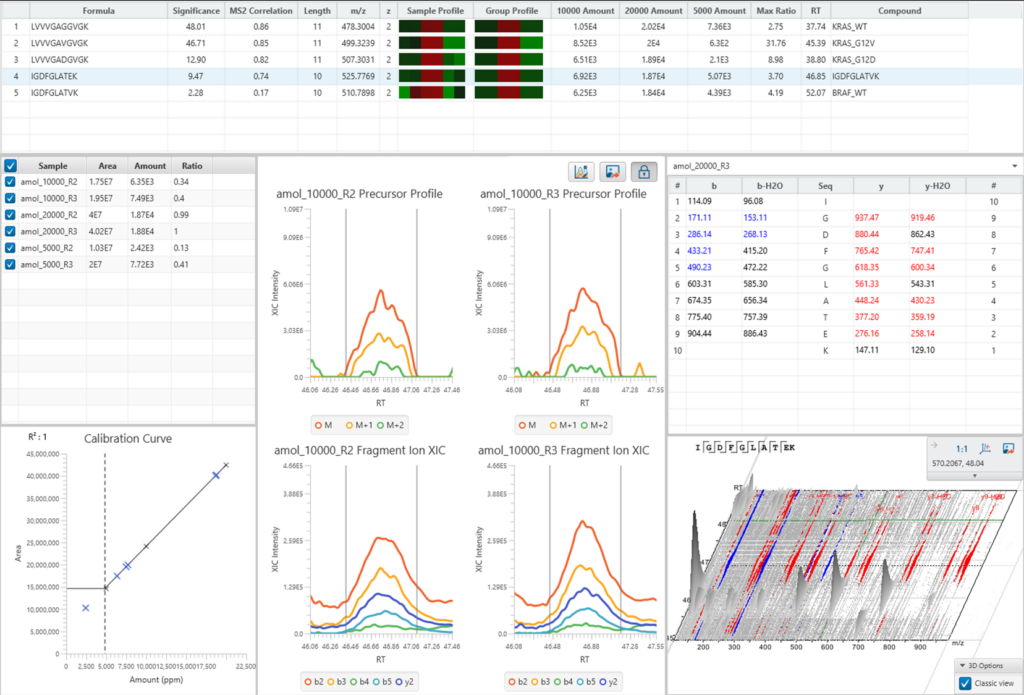
PEAKS features a PRM Targeted Quantification workflow that is precise and reliable for quantifying specific peptides in complex biological samples.
PEAKS Studio now includes a powerful option to manually select peptide fragment ions and retention time ranges of signal profiles, with any changes being previewed before committing. A new annotated MS/MS Data View also makes visual validation of peptide fragment ions easy!
The Protein View
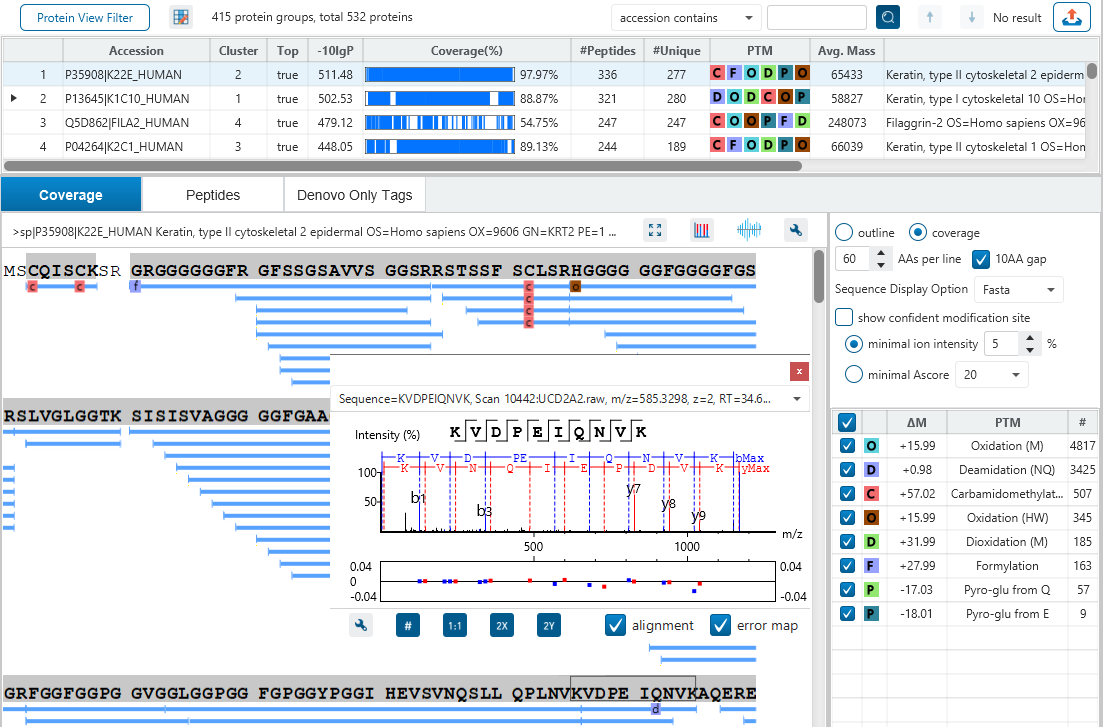
The Protein View presents protein profiling across complex biological samples in both DDA and DIA workflows. For each protein, the Sequence Coverage View displays a peptide map with spectrum annotation for validation. With PEAKS traditional de novo-assisted database search, users easily view identified peptide sequences in blue, while a grey bar indicates a de novo-only tag match.
The Peptide View
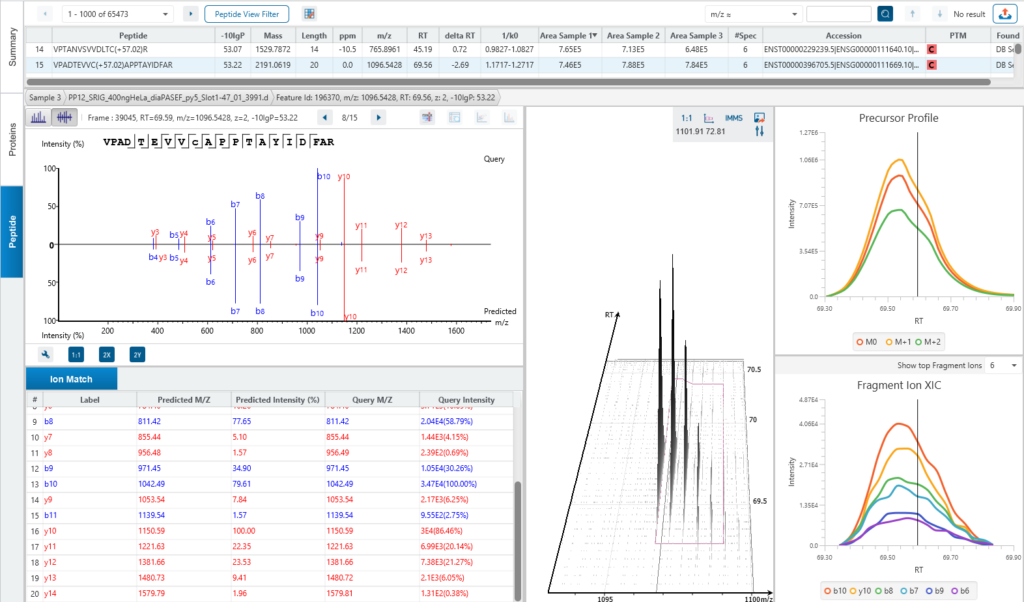
The Peptide View provides a list of identified peptides with the abundance from MS1. For each modified peptide, the confidence of the modification site (Ascore) is associated.
Unmatched Customer Service
✅ Fast, expert responses to your PEAKS questions
Our in-house scientists respond quickly to ensure you never hit a roadblock in your workflow or research timeline.
✅ Frequently updated tutorial resources
Access to step-by-step guides, walkthroughs, and webinars to get the most out of PEAKS Studio for you and your team.
✅ Continuous user-feedback-driven updates
We listen. Your insights and queries directly shape our future releases and platform improvements.

Learn More About
Licence Information
The PEAKS Studio licence can be scaled to address your lab’s requirements.
- Desktop – 24 threads, capable of processing across up to 24 cores
- Workstation – 48 threads, up to and across 48 cores
Configuration
PEAKS Studio is recommended to be installed on 64-bit Windows operating systems with Windows 10 or later.
Recommended Configurations:
Desktop License: 30+ threads processors and 64 GB+ of RAM with compatible GPU (described below)
Workstation License: 60+ threads processors and 128 GB+ of RAM with compatible GPU (described below)
e.g. Intel Core i7/i9/Xeon or AMD Ryzen 7/9/Threadripper processors
For running DeepNovo, it is required that the machine is equipped with an NVIDIA GPU with CUDA compute capability ≥ 8 and at least 8GB of dedicated memory.
For running DIA Database Search, it is recommended that the machine is equipped with an NVIDIA GPU with CUDA compute capability ≥ 5 and at least 8GB of dedicated memory.
The GPU must be updated to CUDA version 12.3 or later.
References & Resources
References
- Tran NH, Qiao R, Xin L, Chen X, Liu C, Zhang X, Shan B, Ghodsi A, Li M, Deep learning enables de novo peptide sequencing from data-independent-acquisition mass spectrometry, Nat. Methods, 16, 63–66 (2019). https://doi.org/10.1038/s41592-018-0260-3
- Tran NH, Zhang X, Xin L, Shan B, Li M. De novo peptide sequencing by deep learning. Proc. Natl. Acad. Sci. U.S.A. 114, 8247-8252 (2017). https://doi.org/10.1073/pnas.1705691114
Resources
- PEAKS Studio 13.1 Brochure
- Application Note: The Proteomics Continuum: Discovery, Definition, and Validation-PEAKS solution for translational medicine research
- Application Note: Determination of unknown PTMs and increased protein sequence coverage from high temperature acidic enzyme digests
- Application Note: From Discovery to Targeted Proteomics: A Complete Workflow for MRMHR-based Peptide Quantitation